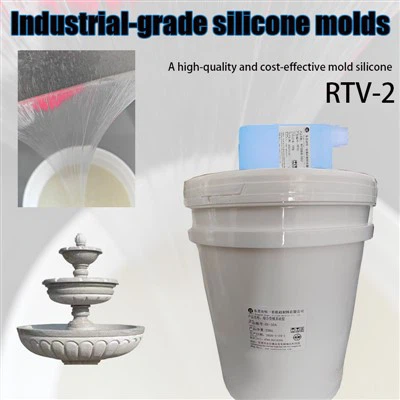
Hey there! As a supplier of RTV - 2 industrial material, I've had a front - row seat to the world of sealants. RTV - 2, which stands for Room Temperature Vulcanizing - Type 2, is a pretty cool industrial material, and today, I'm gonna break down how it stacks up against other types of sealants.
Understanding RTV - 2 Industrial Material
First off, let's get a handle on what RTV - 2 is. It's a two - component silicone rubber that cures at room temperature. You mix the base and the curing agent, and voila, it starts to harden. This stuff is known for its flexibility, excellent adhesion, and resistance to a wide range of temperatures and chemicals.
One of the big perks of RTV - 2 is its ability to create detailed molds. For example, if you're into making Candle silicone mold liquid, RTV - 2 can capture every little nook and cranny, ensuring that your candles have a perfect shape. It's also used in industries where high - precision molding is crucial, like in the manufacturing of small electronic components.
Comparing with Other Sealant Types
1. RTV - 1 Sealants
RTV - 1, or one - component RTV sealants, are different from RTV - 2 in a few key ways. RTV - 1 cures when it comes into contact with moisture in the air. This makes it super easy to use since you just squeeze it out of the tube and it starts to set.
However, RTV - 1 usually has a slower curing time compared to RTV - 2, especially in low - humidity environments. And when it comes to the final properties, RTV - 2 generally offers better tear strength and more consistent properties across the cured material. If you're doing a project that requires quick turnaround and high - performance molds, RTV - 2 is the way to go.
2. Epoxy Sealants
Epoxy sealants are known for their super - strong bonding ability. They can bond different materials together like nothing else. Epoxies also have high chemical resistance and can handle heavy loads.


But here's the deal. Epoxy sealants are often brittle, which means they're not very flexible. For applications where the sealant needs to bend or move with the materials, like in automotive gaskets or flexible industrial parts, RTV - 2 is a far better choice. RTV - 2 can flex and stretch without cracking, making it more durable in dynamic environments.
3. Polyurethane Sealants
Polyurethane sealants are popular because they have good adhesion and can be used in a variety of applications, including construction. They're also resistant to abrasion and weathering.
However, one drawback of polyurethane sealants is their sensitivity to humidity during the curing process. If the humidity is too high or too low, it can affect the curing and the final properties of the sealant. RTV - 2, on the other hand, is less sensitive in this regard, offering more consistent results across different environmental conditions.
The Benefits of RTV - 2 in Specific Applications
Molding Applications
In the world of molding, RTV - 2 shines. As I mentioned before, it can capture the finest details, making it perfect for creating To Create Exquisite Lotus Lantern Molds, Choosing The Right Industrial - grade Mold Silicone Is The Key.. Whether you're making small art pieces or large industrial molds, RTV - 2 ensures that the final product has a high - quality finish.
The flexibility of RTV - 2 also makes it easier to demold the objects. You can bend the mold slightly without breaking it, allowing you to remove the molded item without any damage.
Sealing in Harsh Environments
RTV - 2 is resistant to a wide range of chemicals, including acids, bases, and solvents. This makes it ideal for sealing applications in chemical plants, laboratories, and other industrial settings where the sealant will come into contact with harsh substances.
It also has excellent temperature resistance. It can withstand both high and low temperatures without losing its sealing properties. So, whether you're working in a freezer or a high - temperature manufacturing process, RTV - 2 can hold up.
Potential Drawbacks of RTV - 2
Of course, no material is perfect. One potential drawback of RTV - 2 is its cost. Compared to some other sealants, like basic RTV - 1 or simple epoxy sealants, RTV - 2 can be a bit more expensive. But when you consider its performance, durability, and the quality of the final product, the extra cost is often worth it.
Another thing to keep in mind is that the mixing of the two components requires some precision. If you don't mix them in the correct ratio, it can affect the curing process and the properties of the final sealant. But with a bit of practice, this isn't really a big issue.
Real - World Examples
Let's take a look at some real - world examples where RTV - 2 outperforms other sealants. In the candle - making industry, Condensation Mold Silicone Inks For Veitnam Candles often use RTV - 2 for creating molds. The ability of RTV - 2 to capture fine details means that the candles have a beautiful, intricate design. And since RTV - 2 is flexible, it's easy to remove the candles from the molds without any damage.
In the glassware manufacturing industry, Silicone used for making glassware molds is often RTV - 2. The high - temperature resistance of RTV - 2 allows it to withstand the heat during the glass - molding process, and its flexibility ensures that the glassware can be easily removed from the mold.
Conclusion and Call to Action
In conclusion, RTV - 2 industrial material has a lot going for it when compared to other types of sealants. Its combination of flexibility, high - precision molding capabilities, and resistance to harsh environments makes it a top choice for many industrial applications.
If you've ever had The Mold Production Failed. 90% Of The Reason Was That The Wrong Type Of Silicone Was Chosen., then it might be time to consider RTV - 2. Whether you're in the candle - making business, glassware manufacturing, or any other industry that requires high - quality sealants or molds, RTV - 2 can help you achieve better results.
If you're interested in learning more about our RTV - 2 industrial material or want to discuss your specific needs, don't hesitate to reach out. We'd love to have a chat with you and see how we can assist in your projects. Let's work together to find the perfect sealing solution!
References
- Smith, J. (2020). "Sealants in Industrial Applications: A Comprehensive Guide". Industrial Publishing.
- Johnson, K. (2021). "Comparative Study of Different Sealant Types". Journal of Material Science and Technology.