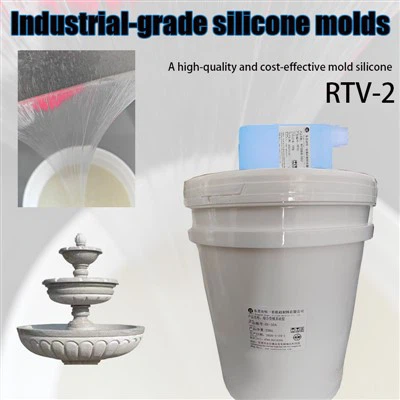
Hey there! I'm a supplier of two - component silicone, and while this stuff has a ton of great uses, it's not all sunshine and rainbows. In this blog, I'm gonna share some of the disadvantages of two - component silicone.
1. Curing Time
One of the biggest drawbacks of two - component silicone is the curing time. You see, when you mix the two components together, they start a chemical reaction that turns the liquid silicone into a solid. But this process can take a while. Depending on the type of two - component silicone and the environmental conditions, it can take anywhere from a few hours to a couple of days to fully cure.
This long curing time can be a real pain in the neck, especially if you're on a tight schedule. For example, if you're making a mold for a product that needs to be shipped out soon, waiting for the silicone to cure can delay the entire production process. And if you try to rush the curing process by increasing the temperature or using other methods, it can sometimes lead to problems like uneven curing or a weaker final product.
2. Sensitivity to Environmental Conditions
Two - component silicone is pretty sensitive to the environment. Temperature and humidity can have a big impact on the curing process. If the temperature is too low, the curing process can slow down significantly or even stop altogether. On the other hand, if it's too hot, the silicone can cure too quickly, which can cause cracking or other issues.
Humidity is also a factor. High humidity can make the curing process more difficult, as it can introduce moisture into the silicone. This moisture can interfere with the chemical reaction and lead to a less - than - perfect final product. For instance, if you're working in a humid environment and using two - component silicone to make a mold, you might end up with a mold that has air bubbles or a rough surface.
3. Cost
Let's talk about money. Two - component silicone can be pretty expensive. The raw materials used to make it are often costly, and the manufacturing process can be complex. This means that the price you pay for two - component silicone is usually higher compared to other materials.
If you're a small business or an individual working on a budget, the cost of two - component silicone can be a major deterrent. For example, if you're making a one - off project and need a small amount of silicone, the high cost might make you think twice about using it. And even for larger projects, the cost can add up quickly, eating into your profit margins.
4. Limited Shelf Life
Another disadvantage is the limited shelf life of two - component silicone. Once the two components are mixed, they have a limited time before they start to cure. And even the individual components have a shelf life on their own. If you don't use the silicone within a certain period, it can start to degrade, which can affect its performance.
This means that you need to be careful about how much silicone you order and use. If you order too much and don't use it all in time, you're basically wasting money. And if you run out of silicone in the middle of a project, it can cause delays.
5. Health and Safety Concerns
Two - component silicone can pose some health and safety risks. When you mix the two components, some types of silicone can release fumes that are harmful if inhaled. These fumes can cause irritation to the eyes, nose, and throat, and in some cases, they can even have more serious long - term health effects.
You also need to be careful when handling the silicone. It can be sticky and difficult to clean off your skin, and if it gets into your eyes, it can cause serious damage. So, you need to wear appropriate protective gear, like gloves and goggles, when working with two - component silicone.
6. Difficulty in Removal
Once the two - component silicone has cured, it can be very difficult to remove. If you've used it to make a mold, for example, and you want to remove the object from the mold, it can be a real challenge. The silicone can stick to the object, and trying to pry it off can damage the object or the mold itself.
This is especially true if the silicone has been in contact with certain materials. For example, if it's been used to make a mold for a plastic object, the silicone can bond with the plastic, making it even harder to separate them.


7. Incompatibility with Some Materials
Two - component silicone is not compatible with all materials. It can react with certain substances, which can lead to problems. For example, some types of silicone can react with certain metals, causing corrosion or discoloration.
If you're using two - component silicone in a project where it will come into contact with other materials, you need to make sure that they are compatible. Otherwise, you might end up with a product that doesn't work as intended or that has a shorter lifespan.
Related Resources
If you're interested in learning more about the challenges related to two - component silicone, check out these useful links:
- The Mold Production Failed. 90% Of The Reason Was That The Wrong Type Of Silicone Was Chosen.
- How To Achieve High Precision And Zero Shrinkage For Perfect Replication?
- Candle silicone mold liquid
Conclusion
Despite these disadvantages, two - component silicone still has a lot of great applications. It's a versatile material that can be used in a wide range of industries, from manufacturing to art. But it's important to be aware of its limitations so that you can make an informed decision when using it.
If you're thinking about using two - component silicone for your project, and you have any questions or want to discuss your specific needs, feel free to reach out. I'm here to help you find the right solution for your project. Let's have a chat and see how we can work together!
References
- Various industry reports on silicone materials
- Personal experience as a two - component silicone supplier