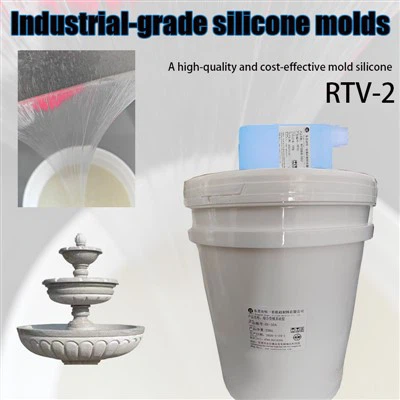
In the realm of industrial materials, resins play a crucial role in various applications. Among them, resin silicone liquid has distinct characteristics that set it apart from other resins. As a supplier of resin silicone liquid, I'm well - versed in its advantages and the differences compared to other resin types. This blog aims to provide an in - depth analysis of these differences to help you make more informed decisions in your projects.
Physical and Chemical Properties
One of the main differences between resin silicone liquid and other resins lies in their physical and chemical properties. Generally, resin silicone liquid has a higher degree of flexibility. This flexibility is due to its unique molecular structure, which consists of siloxane bonds (Si - O). These bonds are relatively long and have a certain degree of rotational freedom, allowing the silicone molecules to bend and stretch easily.
In contrast, many other resins, such as epoxy resins, tend to be more rigid. Epoxy resins form a highly cross - linked three - dimensional network during the curing process. This network structure gives epoxy resins excellent mechanical strength and hardness, but they lack the flexibility that resin silicone liquid offers. For example, in applications where the material needs to withstand repeated bending or deformation, resin silicone liquid is a much better choice.
Another significant difference is in their heat resistance. Resin silicone liquid can withstand high temperatures, often up to 200 - 300 degrees Celsius, and in some cases, even higher. The Si - O bonds in silicone are very stable at high temperatures, and the material does not easily degrade or lose its properties. On the other hand, many common resins like polyester resins have a lower heat - resistance threshold. Polyester resins may start to deform or break down at temperatures above 100 degrees Celsius, which severely limits their use in high - temperature environments.
Curing Process
The curing process of resin silicone liquid also differs significantly from other resins. Resin silicone liquid can be cured through either a condensation - curing or an addition - curing process. In the condensation - curing process, a curing agent reacts with the silicone polymer, releasing a small molecule by - product (usually water or alcohol). This type of curing is relatively slow and can be affected by environmental factors such as humidity and temperature.


Addition - curing silicone, however, is a more advanced method. It involves a platinum - catalyzed reaction where the silicone polymer chains are cross - linked without the release of by - products. This results in a more precise and stable curing process, with less shrinkage and better dimensional stability.
In comparison, other resins like phenolic resins typically undergo a thermosetting process. Phenolic resins are cured by heating them in the presence of a catalyst, which causes a series of chemical reactions that lead to the formation of a rigid and insoluble polymer. This thermosetting process is often irreversible and requires strict temperature control during curing. If you want to learn more about the curing process of silicone, you can refer to How Should The Curing Agent Be Added To Ensure That The Silicone Rubber Has A Long Service Life?
Application Areas
The differences in properties lead to varying application areas for resin silicone liquid and other resins. Resin silicone liquid is widely used in mold - making applications. Its flexibility allows it to easily conform to complex shapes, making it ideal for creating detailed and accurate molds. For example, in the production of Candle silicone mold liquid, the ability of silicone liquid to precisely replicate the shape of the master model is essential.
Moreover, due to its high heat resistance and flexibility, resin silicone liquid is also used in the automotive and aerospace industries. It can be used as gaskets, seals, and insulation materials in engines and other high - temperature components.
In contrast, epoxy resins are commonly used in coating and bonding applications. Their high strength and excellent adhesion properties make them suitable for protecting surfaces from corrosion and for joining different materials together. Polyester resins are often used in the manufacturing of fiberglass products, such as boats and automotive parts, because of their relatively low cost and good mechanical properties.
Durability and Lifespan
Resin silicone liquid generally has a longer lifespan compared to many other resins. Its resistance to environmental factors such as UV radiation, ozone, and chemicals contributes to its durability. Silicone is also resistant to oxidation, which means it can maintain its properties over a long period of time without significant degradation.
In contrast, some other resins may be more susceptible to environmental damage. For example, polycarbonate resins can be easily scratched and may yellow over time when exposed to UV radiation. This reduces their aesthetic appeal and functional performance.
When it comes to mold - making, choosing the right resin is crucial for the lifespan of the mold. Choosing The Wrong Silicone For Cultural Stone Molds Leads To Blurry Textures, Mold Blistering, And Short Lifespan? Try This Industrial - grade Solution. highlights the importance of proper resin selection in ensuring the quality and longevity of molds.
Precision and Shrinkage
In applications where high precision is required, resin silicone liquid has an edge over other resins. During the curing process, resin silicone liquid has very low shrinkage rates, especially in addition - curing systems. This low shrinkage ensures that the final product closely matches the dimensions of the original mold or design.
For example, in the production of industrial parts that require tight tolerances, such as in the electronics industry, the ability of resin silicone liquid to achieve high precision and zero shrinkage is invaluable. You can learn more about achieving high precision with silicone in How To Achieve High Precision And Zero Shrinkage For Perfect Replication?
Many other resins, on the other hand, may experience significant shrinkage during curing. This can lead to dimensional inaccuracies, warping, and reduced quality of the final product.
Cost - effectiveness
The cost - effectiveness of resin silicone liquid depends on the specific application. In general, resin silicone liquid is relatively more expensive than some common resins like polyester resins. However, when considering the long - term benefits such as durability, high performance, and precision, it can be a more cost - effective choice in many applications.
For high - end projects where quality and performance are of utmost importance, the additional cost of resin silicone liquid is often justified. For example, in the production of high - precision medical devices or aerospace components, the reliability and quality provided by resin silicone liquid outweigh the cost difference.
Conclusion
In summary, resin silicone liquid stands out from other resins in several key aspects, including physical and chemical properties, curing process, application areas, durability, precision, and cost - effectiveness. Its flexibility, high heat resistance, low shrinkage, and long lifespan make it a preferred choice for many specialized applications.
If you are in need of resin silicone liquid for your projects, whether it's for mold - making, industrial applications, or any other use, our company can provide high - quality products tailored to your specific requirements. We have a wide range of resin silicone liquid products, such as High Performance Mold Making Silicone - Tin Cure, to meet different needs.
We welcome you to contact us for procurement and negotiation. We can offer you detailed product information, technical support, and competitive pricing. Let's work together to find the best resin silicone liquid solution for your projects.
References
- Handbook of Silicone Rubber, various authors.
- Resin Chemistry and Applications, academic publication.