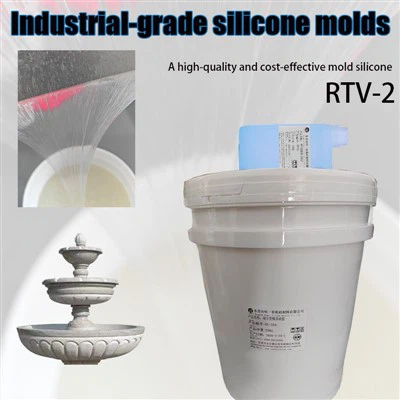
As a supplier of RTV-2 construction silicone, I often encounter inquiries about the various applications of our product. One question that frequently comes up is whether RTV-2 construction silicone can be used for thermal insulation. In this blog post, I will delve into this topic, exploring the properties of RTV-2 construction silicone and its potential for thermal insulation.
Understanding RTV-2 Construction Silicone
RTV-2 (Room Temperature Vulcanizing - Type 2) construction silicone is a two - component silicone rubber that cures at room temperature. It is widely used in the construction industry for applications such as sealing joints, bonding materials, and creating flexible moldings. The two components, typically a base and a catalyst, are mixed together, and the mixture then undergoes a chemical reaction to form a solid, rubbery material.
RTV-2 construction silicone offers several advantages, including excellent weather resistance, high flexibility, and good adhesion to a variety of substrates. It can withstand a wide range of temperatures, from extreme cold to high heat, and is resistant to UV radiation, ozone, and moisture. These properties make it a popular choice for outdoor and indoor construction projects.
Thermal Insulation: What It Means
Thermal insulation is the process of reducing the transfer of heat between two objects or areas. In the context of construction, thermal insulation is used to keep buildings warm in the winter and cool in the summer, thereby reducing energy consumption and improving comfort. Effective thermal insulation materials have low thermal conductivity, which means they do not allow heat to pass through them easily.
Can RTV-2 Construction Silicone Be Used for Thermal Insulation?
To determine whether RTV-2 construction silicone can be used for thermal insulation, we need to examine its thermal conductivity. Thermal conductivity is a measure of how well a material conducts heat, and it is typically expressed in units of watts per meter - kelvin (W/m·K). Materials with low thermal conductivity are good insulators, while those with high thermal conductivity are good conductors.
RTV-2 construction silicone generally has a relatively low thermal conductivity compared to some other materials. However, its thermal insulation properties are not as high as those of dedicated thermal insulation materials such as fiberglass, foam insulation, or aerogels. The thermal conductivity of RTV-2 construction silicone can vary depending on its formulation, but it typically ranges from about 0.1 to 0.2 W/m·K.
While this level of thermal conductivity is lower than that of many metals and some plastics, it is not sufficient for applications where high - performance thermal insulation is required. For example, in a building's exterior walls, where the goal is to minimize heat transfer between the inside and outside, materials with thermal conductivities of less than 0.05 W/m·K are often preferred.
Applications Where RTV-2 Construction Silicone Can Contribute to Thermal Insulation
Although RTV-2 construction silicone may not be a primary thermal insulation material, it can still play a role in certain applications where some degree of thermal insulation is needed.


Sealing and Gasketing
One of the main ways RTV-2 construction silicone can contribute to thermal insulation is by sealing gaps and joints. When used as a sealant, it can prevent air leakage, which is a major cause of heat loss in buildings. By creating an airtight seal around windows, doors, and other openings, RTV-2 construction silicone can help to reduce the amount of heat that escapes or enters a building, thereby improving its overall energy efficiency.
Bonding and Encapsulation
In some cases, RTV-2 construction silicone can be used to bond or encapsulate components that require some level of thermal insulation. For example, it can be used to bond insulation materials to a substrate or to encapsulate electronic components to protect them from heat. While the silicone itself may not provide a high level of thermal insulation, it can help to hold the insulation in place and prevent heat transfer through gaps or voids.
Limitations of RTV-2 Construction Silicone for Thermal Insulation
As mentioned earlier, the thermal insulation properties of RTV-2 construction silicone are limited compared to dedicated thermal insulation materials. Some of the limitations include:
Thickness Constraints
RTV-2 construction silicone is typically applied in relatively thin layers, usually a few millimeters thick. This limited thickness restricts its ability to provide significant thermal insulation. In contrast, dedicated thermal insulation materials can be installed in much thicker layers, which allows them to provide better insulation.
Cost - Effectiveness
Using RTV-2 construction silicone as a primary thermal insulation material may not be cost - effective. Dedicated thermal insulation materials are often more efficient at reducing heat transfer, which means that less material is needed to achieve the same level of insulation. This can result in lower overall costs for the insulation project.
Exploring Related Products
If you are interested in other silicone - based products, you might want to check out our Condensation Mold Silicone Inks ShoreA 5 and Candle silicone mold liquid. These products have their own unique properties and applications, and understanding them can help you make more informed decisions about your projects.
Mastering Adhesive Selection
Understanding The Parameters Is The Key To Truly Mastering Adhesive Selection. When considering the use of RTV-2 construction silicone for any application, including thermal insulation, it is crucial to understand the key parameters such as adhesion, flexibility, and thermal conductivity. This knowledge will enable you to select the right product for your specific needs.
Conclusion and Call to Action
In conclusion, while RTV-2 construction silicone is not a high - performance thermal insulation material, it can still contribute to thermal insulation in certain applications, such as sealing and gasketing. Its properties make it a useful addition to a construction project, but it should not be relied upon as the sole means of thermal insulation.
If you are interested in learning more about RTV-2 construction silicone or have specific requirements for your project, I encourage you to reach out for a detailed discussion. Our team of experts is ready to assist you in selecting the right product and providing technical support. We look forward to the opportunity to work with you and help you achieve your construction goals.
References
- ASTM International. "Standard Test Method for Thermal Conductivity of Plastics by Means of a Thermal Conductivity Cell." ASTM D5470 - 17.
- ASHRAE Handbook. "Fundamentals." American Society of Heating, Refrigerating and Air - Conditioning Engineers, Inc.