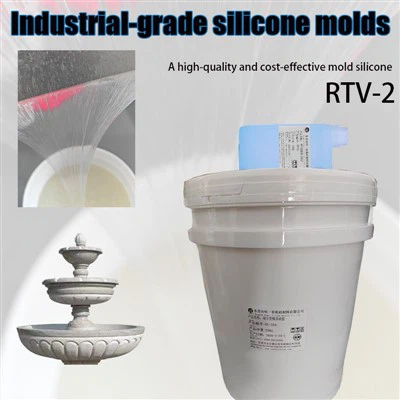
Can RTV - 2 industrial materials be used in high - vibration applications?
As a supplier of RTV - 2 industrial materials, I often encounter inquiries from customers regarding the suitability of our products for various applications, especially in high - vibration environments. This blog aims to explore whether RTV - 2 industrial materials can be effectively used in high - vibration applications and provide a comprehensive analysis based on scientific knowledge and practical experience.
Understanding RTV - 2 Industrial Materials
Room - Temperature Vulcanizing (RTV) - 2 silicone rubber is a two - component elastomer that cures at room temperature. It consists of a base compound and a curing agent. When these two components are mixed in the correct ratio, a chemical reaction occurs, resulting in the formation of a flexible, durable, and high - performance rubber material.
RTV - 2 silicone rubber offers several advantageous properties. It has excellent thermal stability, with the ability to withstand a wide range of temperatures, from extremely low to relatively high temperatures. It also demonstrates good chemical resistance, making it resistant to many chemicals, oils, and solvents. Additionally, RTV - 2 silicone rubber has great electrical insulation properties, which are crucial in many industrial and electronic applications.
In terms of mechanical properties, RTV - 2 silicone rubber has high flexibility and elasticity. It can be stretched and deformed under stress and then return to its original shape once the stress is removed. These properties make it a popular choice in various industries, such as automotive, electronics, aerospace, and mold - making.
Factors Affecting the Use of RTV - 2 in High - Vibration Applications
- Material Flexibility and Damping: One of the key aspects for high - vibration applications is the material's flexibility and damping properties. RTV - 2 silicone rubber's high flexibility allows it to absorb and dissipate vibrational energy. When subjected to vibration, the rubber can deform and then recover, converting the kinetic energy of vibration into heat energy through internal friction. This damping effect helps to reduce the amplitude of vibration and protect the components from excessive stress.
- Adhesion and Bonding: In high - vibration applications, the RTV - 2 material needs to adhere firmly to the substrate. Good adhesion ensures that the material does not detach or move during vibration, which could lead to failure. Our RTV - 2 products are designed to have excellent adhesion properties to a variety of substrates, including metals, plastics, and ceramics. However, proper surface preparation is essential to achieve the best adhesion results.
- Mechanical Strength: Although RTV - 2 silicone rubber is flexible, it also needs to have sufficient mechanical strength to withstand the forces generated by high - frequency vibrations. The material should not tear or break under the continuous stress of vibration. Our RTV - 2 industrial materials are engineered to have high tensile strength and tear resistance, which are important for long - term performance in high - vibration environments.
- Temperature Resistance: High - vibration applications often generate heat due to friction and energy dissipation. RTV - 2 silicone rubber's excellent thermal stability allows it to maintain its properties at elevated temperatures. This is crucial because if the material softens or degrades at high temperatures, it may lose its ability to dampen vibrations and protect the components.
Case Studies and Applications
- Automotive Industry: In the automotive industry, RTV - 2 silicone rubber is widely used in engine mounts and suspension components. These parts are exposed to high - frequency vibrations generated by the engine and the movement of the vehicle. RTV - 2 silicone rubber's damping properties help to reduce the transmission of vibrations to the vehicle body, improving the comfort of the passengers and protecting other components from damage caused by excessive vibration.
- Electronics Industry: In electronic devices, RTV - 2 silicone rubber is used for potting and encapsulation. High - vibration environments, such as in aerospace or industrial machinery, can cause electronic components to vibrate and potentially fail. By using RTV - 2 silicone rubber to encapsulate these components, the material can absorb the vibrational energy and provide physical protection, ensuring the reliable operation of the electronics.
- Mold - Making: When it comes to mold - making, RTV - 2 silicone rubber is a popular choice. In applications where the mold may be subjected to vibrations during the casting process, such as in the production of cultural stone molds or candle silicone molds. The use of high - quality RTV - 2 materials ensures the integrity of the mold and the quality of the castings. For example, Choosing The Wrong Silicone For Cultural Stone Molds Leads To Blurry Textures, Mold Blistering, And Short Lifespan? Try This Industrial - grade Solution. provides more information on using RTV - 2 for cultural stone molds. Similarly, Candle silicone mold liquid and Condensation Mold Silicone Inks ShoreA 5 highlight its use in candle mold applications. Also, To Create Exquisite Lotus Lantern Molds, Choosing The Right Industrial - grade Mold Silicone Is The Key. shows how RTV - 2 can be used to make high - quality lotus lantern molds.
Limitations and Considerations
While RTV - 2 industrial materials have many advantages for high - vibration applications, there are also some limitations and considerations.


- Initial Curing Time: The curing time of RTV - 2 silicone rubber can vary depending on the formulation and environmental conditions. In some cases, the initial curing time may be relatively long, which could affect the production efficiency. However, our company offers a range of products with different curing times to meet the specific needs of our customers.
- Cost: Compared to some other materials, RTV - 2 silicone rubber can be relatively expensive. However, considering its long - term performance, durability, and the protection it provides to components, the cost - effectiveness should be evaluated in the context of the overall application.
Conclusion
In conclusion, RTV - 2 industrial materials can be effectively used in high - vibration applications. Their flexibility, damping properties, adhesion, mechanical strength, and temperature resistance make them suitable for a wide range of industries and applications where vibration control is crucial. Whether it is in automotive, electronics, or mold - making, RTV - 2 silicone rubber can provide reliable performance and protection.
If you are looking for high - quality RTV - 2 industrial materials for your high - vibration applications, we are here to help. We have a team of experts who can provide you with professional advice and customized solutions based on your specific requirements. Contact us for a detailed discussion and let's explore the best RTV - 2 products for your project.
References
- "Silicone Rubber Handbook" by William Andrew Publishing
- Industry reports on the use of RTV - 2 silicone rubber in automotive and electronics industries.