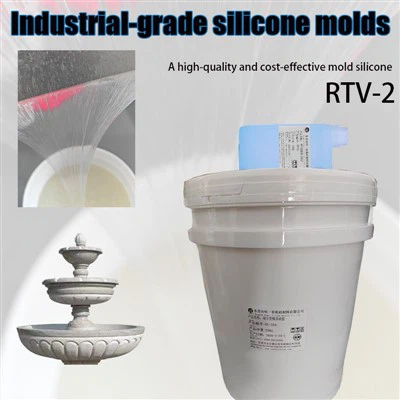
Hey there! As a supplier of Textured stone silicone liquid, I often get asked if it can be mixed with other substances. Well, let's dive right into this topic and explore the ins and outs of mixing Textured stone silicone liquid with different materials.
Understanding Textured Stone Silicone Liquid
First off, let's talk a bit about what Textured stone silicone liquid is. It's a type of silicone that's specifically formulated to create molds with a textured stone - like finish. This stuff is great for making all sorts of things, from decorative pieces to architectural elements. It has excellent flexibility, durability, and can capture fine details really well.
Can It Be Mixed with Other Substances?
The short answer is, it depends. There are some substances that can be mixed with Textured stone silicone liquid, while others are a big no - no.
Compatible Substances
-
Pigments: One of the most common things to mix with Textured stone silicone liquid is pigments. Pigments can be used to add color to the silicone, allowing you to create molds or finished products in a wide range of hues. Whether you want a natural stone color or a bright, eye - catching shade, pigments can do the trick. Just make sure to use pigments that are specifically designed for use with silicone.
-
Fibers: Adding fibers like glass fibers or carbon fibers can enhance the strength and durability of the Textured stone silicone liquid. These fibers can help prevent the silicone from cracking or breaking, especially in larger or more complex molds. The fibers are usually added in small amounts and thoroughly mixed into the silicone to ensure an even distribution.
-
Other Silicone - Based Products: In some cases, you can mix Textured stone silicone liquid with other silicone - based products. For example, if you have a clear silicone liquid and you want to add a bit of texture, you can mix it with a small amount of Textured stone silicone liquid. However, you need to be careful when doing this, as different silicone products may have different curing times and properties.
Incompatible Substances
- Water - Based Materials: Water and silicone don't mix well. Water can cause the silicone to cure improperly or form bubbles, which will ruin the quality of the mold or finished product. So, avoid mixing Textured stone silicone liquid with any water - based substances like water - based paints or glues.
- Certain Chemicals: There are some chemicals that can react with silicone and cause it to break down or lose its properties. For example, strong acids or alkalis can damage the silicone. Before mixing any chemical with Textured stone silicone liquid, it's important to do a small test to make sure there's no adverse reaction.
Benefits of Mixing
Mixing Textured stone silicone liquid with compatible substances can offer several benefits.
-
Customization: As mentioned earlier, adding pigments allows you to customize the color of the silicone. This is great for creating unique and personalized products. You can match the color of the silicone to a specific design or theme.
-
Enhanced Properties: Mixing with fibers or other silicone - based products can improve the strength, flexibility, or other properties of the silicone. This can make the molds more durable and the finished products more reliable.
-
Cost - Saving: In some cases, you can mix Textured stone silicone liquid with a less expensive silicone - based product to reduce the cost without sacrificing too much quality.
Risks of Mixing
However, there are also some risks associated with mixing Textured stone silicone liquid with other substances.
- Curing Issues: Different substances may have different effects on the curing process of the silicone. If the curing time is affected, the mold or finished product may not turn out as expected. It could be too soft, too hard, or have an uneven texture.
- Chemical Reactions: As mentioned before, some substances can react with the silicone and cause damage. This can lead to a loss of quality, reduced durability, or even complete failure of the product.
Applications of Mixed Textured Stone Silicone Liquid
-
Art and Crafts: When mixed with pigments, Textured stone silicone liquid can be used to create beautiful and unique art pieces. Artists can make sculptures, figurines, or decorative items with a textured stone finish in a variety of colors.
-
Construction: In the construction industry, Textured stone silicone liquid mixed with fibers can be used to create molds for architectural elements. These molds can then be used to make pre - cast concrete parts with a realistic stone texture.
-
Candle - Making: Candle silicone mold liquid can be combined with Textured stone silicone liquid to create interesting and textured candle molds. This allows for the production of candles with a unique appearance.
More on Silicone and Its Types
If you're interested in learning more about silicone, check out What Are The Different Types Of Silicone Molds?. This link provides detailed information about the various types of silicone molds available in the market.
There are also some specialized silicone inks that are worth mentioning. Condensation Mold Silicone Inks For Concrete/Cement can be used in combination with Textured stone silicone liquid to add more details and colors to concrete or cement molds. Similarly, Condensation Mold Silicone Inks For Veitnam Candles can be used to enhance the appearance of candles made with silicone molds.
For industrial applications, Industrial - grade Silicone For Molds can sometimes be mixed with Textured stone silicone liquid to meet specific requirements.
Conclusion
So, can Textured stone silicone liquid be mixed with other substances? Yes, it can, but you need to be careful and do your research. Make sure to test any new mixture on a small scale before using it for a large project. Mixing can offer great benefits in terms of customization and enhanced properties, but it also comes with risks.


If you're interested in purchasing Textured stone silicone liquid or have any questions about mixing it with other substances, feel free to reach out. We're here to help you make the most of this amazing product and create some truly unique and high - quality items.
References
- General knowledge about silicone materials and their properties.
- Industry standards and best practices for working with silicone.