Can two - component silicone be used for vacuum applications?
Hey there! I'm a supplier of two - component silicone, and today I wanna talk about whether this stuff can be used for vacuum applications. It's a question I get a lot, so let's dig in and find out.
First off, what's two - component silicone anyway? Well, it's a type of silicone rubber that comes in two parts: a base and a curing agent. When you mix these two together, a chemical reaction happens, and the silicone cures into a solid, flexible material. It's known for its great properties like high temperature resistance, good chemical resistance, and excellent flexibility.
Now, let's talk about vacuum applications. Vacuum systems are used in a whole bunch of industries, from manufacturing to research. In these applications, you need materials that can withstand low pressures without breaking down or releasing gases. This is crucial because any gas released from the materials can contaminate the vacuum environment and mess up the process.
So, can two - component silicone handle the vacuum? The answer is, it depends. There are a few factors we need to consider.
One of the main things is outgassing. Outgassing is when a material releases gases when it's exposed to a vacuum. This can be a big problem in vacuum applications. Some two - component silicones have a relatively high outgassing rate, which means they're not suitable for high - vacuum environments. But don't worry! There are also low - outgassing two - component silicones available on the market. These are specially formulated to release very little gas, making them a better choice for vacuum applications.
Another factor is the mechanical properties of the silicone. In a vacuum, the pressure difference can put a lot of stress on the material. The silicone needs to be strong enough to withstand this stress without cracking or deforming. Two - component silicones can have different levels of hardness and toughness. For vacuum applications, you'll usually want a silicone with good mechanical strength.
The curing process also matters. The way the two - component silicone cures can affect its performance in a vacuum. If the curing process isn't done properly, there could be air bubbles trapped inside the silicone. These bubbles can expand in a vacuum and cause the silicone to fail. So, it's important to follow the manufacturer's instructions carefully when curing the silicone.
Now, let me share some of the applications where two - component silicone can work well in a vacuum.
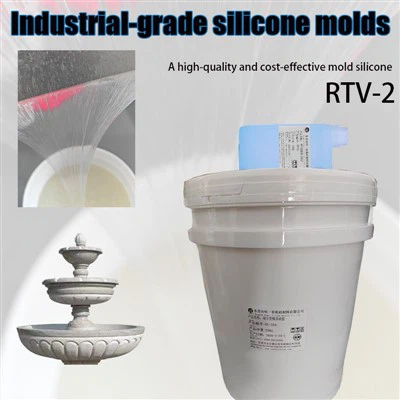
In the manufacturing of electronic components, vacuum chambers are often used for processes like semiconductor packaging. Two - component silicone can be used as a sealant or potting material. It can protect the electronic components from dust, moisture, and other contaminants. For example, Industrial-grade Silicone For Molds can be used in the manufacturing process of electronic parts in a vacuum environment.
In the scientific research field, vacuum systems are used for experiments. Two - component silicone can be used to make gaskets or O - rings for these vacuum chambers. It can provide a tight seal to prevent air from leaking into the chamber.


When it comes to making molds in a vacuum, two - component silicone also has its place. For instance, Condensation Mold Silicone Inks For Concrete/Cement can be used to create molds for concrete or cement products. The vacuum can help to remove air bubbles from the silicone during the molding process, resulting in a more precise and high - quality mold.
However, there are also some challenges. If you choose the wrong type of two - component silicone for a vacuum application, it can lead to problems. As mentioned in The Mold Production Failed. 90% Of The Reason Was That The Wrong Type Of Silicone Was Chosen., using the wrong silicone can cause the mold production to fail. So, it's really important to do your research and choose the right product.
Let's take a look at some specific types of two - component silicone and their suitability for vacuum applications.
There are addition - cured two - component silicones. These are known for their low - outgassing properties. They cure through an addition reaction, which doesn't produce any by - products. This makes them a great choice for high - vacuum applications. They also have good mechanical properties and can withstand a wide range of temperatures.
On the other hand, condensation - cured two - component silicones may not be as suitable for high - vacuum applications. The curing process of condensation - cured silicones produces small amounts of alcohol or water as by - products. These by - products can outgas in a vacuum and contaminate the environment. But they can still be used in low - vacuum applications or where a small amount of outgassing is acceptable.
If you're in the business of making candles and using a silicone mold, The Silicone Liquid Used For Making The Silicone Mold For Candles can be considered. When using it in a vacuum environment to make the mold, you need to ensure that the silicone you choose has proper properties to handle the vacuum.
Similarly, for those who are involved in making glassware molds, Silicone used for making glassware molds needs to be carefully selected to work well in a vacuum. The temperature and pressure conditions in the mold - making process in a vacuum can be quite demanding, so the right silicone is essential.
In conclusion, two - component silicone can be used for vacuum applications, but you need to be careful about which type you choose. Consider factors like outgassing, mechanical properties, and the curing process. If you're not sure which product is right for your specific vacuum application, don't hesitate to reach out. We're here to help you make the best choice for your needs. Whether you're in the electronics, manufacturing, or research industry, we've got a wide range of two - component silicones that might just be the perfect fit for your vacuum project. So, if you're interested in learning more or making a purchase, feel free to start a conversation with us. We can provide you with detailed information and samples to help you make an informed decision.
References
- General knowledge about two - component silicone properties and vacuum applications.
- Information from related product specifications and industry research.