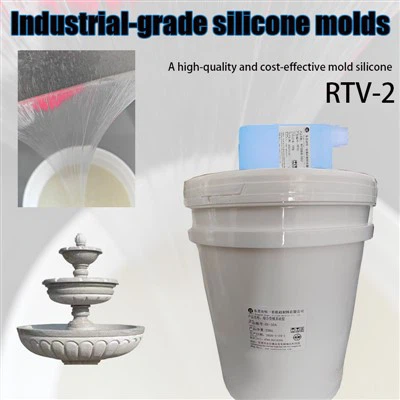
As a reputable supplier of Glossy Surface Silicone, I understand the critical importance of ensuring the purity of our products. In various industries, from consumer goods to high - tech applications, the quality and purity of glossy surface silicone can significantly impact the performance and longevity of the end - products. This blog post will delve into the methods of checking the purity of glossy surface silicone, providing valuable insights for customers and industry professionals alike.
Understanding Glossy Surface Silicone
Glossy surface silicone is a type of silicone material that features a smooth, shiny finish. It is widely used in applications such as automotive parts, electronic devices, and household items due to its excellent physical and chemical properties, including high temperature resistance, weatherability, and flexibility. However, impurities in the silicone can compromise these properties, leading to issues such as reduced durability, discoloration, and even malfunction of the end - products.
Visual Inspection
The first step in checking the purity of glossy surface silicone is a visual inspection. A high - quality, pure glossy surface silicone should have a uniform appearance without any visible defects, such as bubbles, streaks, or foreign particles. When examining the silicone, make sure to do so under good lighting conditions. Hold the sample against a white background to better detect any discoloration or irregularities.
If you notice any visible impurities, it could be a sign of poor manufacturing processes or contamination during production. For instance, air bubbles may indicate improper mixing during the manufacturing stage, while foreign particles could suggest that the raw materials were not properly filtered.
Physical Property Testing
Hardness Testing
Hardness is an important physical property of silicone. A reliable way to check the purity of glossy surface silicone is to measure its hardness using a durometer. The hardness of silicone is typically measured on the Shore scale, with Shore A being used for softer materials and Shore D for harder ones.
For glossy surface silicone, the hardness should fall within a specific range depending on its intended application. Deviations from the expected hardness could indicate the presence of impurities. For example, if the silicone is too soft, it might contain excessive plasticizers or other additives that are not part of the pure silicone formulation.
Tensile Strength and Elongation Testing
Tensile strength and elongation are also crucial properties to consider. Pure glossy surface silicone should have consistent tensile strength and elongation characteristics. To test these properties, a sample of the silicone is typically pulled until it breaks using a tensile testing machine.
During the test, measure the maximum force the sample can withstand (tensile strength) and the amount it stretches before breaking (elongation). Any significant variation in these values from the standard specifications could be a sign of impurities or an improper manufacturing process. For example, impurities may cause weak points in the silicone structure, resulting in lower tensile strength and reduced elongation.
Chemical Analysis
Fourier - Transform Infrared Spectroscopy (FTIR)
FTIR is a powerful analytical technique used to identify the chemical bonds in a material. By analyzing the infrared spectrum of a glossy surface silicone sample, we can determine the presence of specific chemical functional groups.
Pure silicone has characteristic peaks in its FTIR spectrum that correspond to the silicone - oxygen (Si - O) bonds. If there are additional peaks in the spectrum, it could indicate the presence of impurities such as organic compounds or other contaminants. For example, peaks associated with carbon - hydrogen (C - H) bonds might suggest the presence of organic additives or contaminants in the silicone.
Gas Chromatography - Mass Spectrometry (GC - MS)
GC - MS is another effective method for detecting impurities in glossy surface silicone. This technique separates the components of a sample based on their volatility and then identifies them using mass spectrometry.
By analyzing the chromatogram and mass spectra, we can detect and quantify trace amounts of volatile organic compounds (VOCs) and other impurities in the silicone. For instance, if there are peaks corresponding to solvents or other chemical residues in the GC - MS analysis, it indicates that the silicone may have been contaminated during the manufacturing or packaging process.
Thermal Analysis
Differential Scanning Calorimetry (DSC)
DSC measures the heat flow associated with physical and chemical changes in a material as a function of temperature. For glossy surface silicone, DSC can be used to detect impurities by observing changes in the melting point, crystallization point, and glass transition temperature.
Pure silicone has well - defined thermal properties. Any deviation from the expected thermal behavior, such as an unexpected endothermic or exothermic peak, could indicate the presence of impurities. For example, the presence of a low - melting - point impurity may cause an additional endothermic peak at a lower temperature than the melting point of pure silicone.
Thermogravimetric Analysis (TGA)
TGA measures the change in mass of a material as a function of temperature. By heating the silicone sample at a controlled rate, we can observe the weight loss due to the evaporation of volatile components or the decomposition of the material.
Pure glossy surface silicone should have a relatively stable weight up to a certain temperature. If there is excessive weight loss at lower temperatures, it could be a sign of impurities such as solvents or low - molecular - weight additives.
Industry Applications and Related Products
Glossy surface silicone is used in a wide range of industries, and we offer several related products to meet different customer needs. For example, Ribbon Printing Silicone is specially formulated for ribbon printing applications, providing excellent printability and adhesion. Our Machine - Print Nomal High Density Silicone is ideal for machine - printing processes, offering high density and consistent performance. And Dot - Molding Silicone for Socks is designed for the textile industry, creating unique dot - molding effects on socks.
Conclusion
Ensuring the purity of glossy surface silicone is essential for its performance and reliability in various applications. By using a combination of visual inspection, physical property testing, chemical analysis, and thermal analysis, we can effectively detect and quantify any impurities in the silicone.
As a supplier, we are committed to providing high - quality glossy surface silicone products that meet the strictest purity standards. We use advanced manufacturing processes and rigorous quality control measures to ensure the consistency and purity of our products.
If you are in the market for glossy surface silicone or have any questions about its purity and quality, we encourage you to reach out to us for a detailed discussion. We are always ready to assist you in finding the best silicone solutions for your specific needs.


References
- ASTM International. (20XX). Standard Test Methods for Rubber Property - Durometer Hardness.
- ISO. (20XX). Plastics - Determination of Tensile Properties.
- Smith, J. (20XX). Analytical Techniques for Silicone Analysis. Journal of Polymer Science.