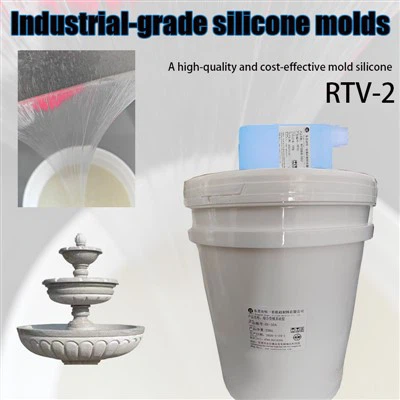
As a supplier of flip mold silicone, I have witnessed the growing demand for large - scale flip molds in various industries, from art and crafts to industrial manufacturing. In this blog, I will share a comprehensive guide on how to make a large - scale flip mold with silicone, covering everything from materials selection to the final casting process.
Understanding the Basics of Silicone for Flip Molds
Before we start the process, it's essential to understand the type of silicone suitable for large - scale flip molds. There are two main types of mold - making silicone: addition - cure and condensation - cure. For large - scale flip molds, Condensation Mold Silicone is often a popular choice due to its relatively lower cost and ease of use.
Condensation - cure silicone is a two - part system that consists of a base and a catalyst. When these two parts are mixed in the correct ratio, a chemical reaction occurs, resulting in the curing of the silicone. This type of silicone is suitable for making molds with complex shapes and fine details, which is crucial for large - scale flip molds.


Materials and Tools Required
Materials
- Silicone Rubber: As mentioned earlier, choose a high - quality condensation - cure silicone rubber. Make sure to check the product specifications for details such as hardness, tear strength, and curing time.
- Mold Release Agent: A good mold release agent is essential to ensure that the silicone mold can be easily separated from the master model. There are various types of mold release agents available, such as wax - based, silicone - based, and PVA (polyvinyl alcohol) - based agents.
- Master Model: This is the object from which you will create the mold. It can be made of various materials, such as wood, plaster, or resin. The master model should be clean, dry, and free of any defects.
Tools
- Mixing Containers: You will need clean, non - reactive containers to mix the silicone rubber and the catalyst. Plastic or metal containers are suitable for this purpose.
- Mixing Sticks: Use disposable mixing sticks to stir the silicone rubber and the catalyst thoroughly.
- Brushes: Brushes are used to apply the mold release agent and the silicone rubber to the master model. Make sure to use brushes with soft bristles to avoid damaging the master model.
- Scales: Accurate measurement of the silicone rubber and the catalyst is crucial for proper curing. Use a digital scale to measure the materials precisely.
- Vacuum Chamber (Optional): A vacuum chamber can be used to remove air bubbles from the silicone rubber mixture, resulting in a more accurate and bubble - free mold.
Step - by - Step Process
Step 1: Prepare the Master Model
- Clean the master model thoroughly to remove any dust, dirt, or grease. You can use a mild detergent and water to clean the model, followed by a dry cloth to dry it completely.
- Apply a mold release agent to the master model. Make sure to apply an even coat of the release agent, covering all the surfaces of the master model. Allow the release agent to dry according to the manufacturer's instructions.
Step 2: Mix the Silicone Rubber
- Measure the appropriate amount of silicone rubber base and catalyst according to the manufacturer's instructions. For example, if the ratio is 10:1, measure 10 parts of the base and 1 part of the catalyst.
- Pour the silicone rubber base into a clean mixing container. Then, add the catalyst to the base.
- Use a mixing stick to stir the silicone rubber and the catalyst thoroughly. Make sure to scrape the sides and the bottom of the container to ensure that all the materials are well - mixed. Stir for at least 3 - 5 minutes to achieve a homogeneous mixture.
Step 3: Remove Air Bubbles (Optional)
- If you have a vacuum chamber, place the mixing container with the silicone rubber mixture inside the chamber.
- Close the chamber and turn on the vacuum pump. The vacuum will remove the air bubbles from the silicone rubber mixture. Keep the mixture under vacuum for about 5 - 10 minutes, or until all the air bubbles have been removed.
Step 4: Pour the Silicone Rubber
- Slowly pour the silicone rubber mixture onto the master model. Start from one end and pour the mixture in a continuous stream, allowing it to flow over the surface of the master model.
- Use a brush to spread the silicone rubber evenly over the master model, making sure to cover all the details and corners. If there are any air bubbles on the surface of the silicone rubber, you can use a toothpick or a needle to pop them.
Step 5: Let the Silicone Cure
- Allow the silicone rubber to cure according to the manufacturer's instructions. The curing time can vary depending on the type of silicone rubber and the temperature. In general, it can take anywhere from a few hours to a day for the silicone to fully cure.
- During the curing process, make sure to keep the mold in a clean and dry environment. Avoid touching or moving the mold until it is fully cured.
Step 6: Demold the Silicone Mold
- Once the silicone rubber has fully cured, carefully remove the mold from the master model. Start by gently peeling the edges of the mold away from the master model.
- If the mold is difficult to remove, you can use a release agent or a small tool, such as a spatula, to help separate the mold from the master model. Be careful not to damage the mold or the master model during the demolding process.
Considerations for Large - Scale Flip Molds
Size and Weight
- When making a large - scale flip mold, the size and weight of the mold can be a challenge. Make sure to use a sturdy container to hold the silicone rubber mixture and the master model. You may also need to use additional support structures, such as wooden frames or metal brackets, to prevent the mold from deforming during the curing process.
Curing Time
- Larger molds may require a longer curing time. Make sure to follow the manufacturer's instructions and allow sufficient time for the silicone rubber to fully cure. You can also adjust the curing time by changing the temperature or the ratio of the catalyst to the base.
Surface Finish
- For large - scale flip molds, achieving a smooth and even surface finish is crucial. Make sure to use a high - quality mold release agent and apply it evenly to the master model. You can also sand the surface of the mold after it has cured to improve the surface finish.
Applications of Large - Scale Flip Molds
Large - scale flip molds made with silicone have a wide range of applications, including:
- Art and Sculpture: Artists can use silicone flip molds to create multiple copies of their sculptures or artworks.
- Industrial Manufacturing: In the manufacturing industry, silicone flip molds can be used to produce large - scale parts, such as automotive components, furniture, and architectural elements.
- Decorative Items: Silicone flip molds can be used to create decorative items, such as wall panels, ceiling tiles, and floor mats.
Choosing the Right Silicone for Your Needs
When choosing silicone for large - scale flip molds, it's important to consider your specific needs. For example, if you are making a mold for cultural stone, Choosing The Wrong Silicone For Cultural Stone Molds Leads To Blurry Textures, Mold Blistering, And Short Lifespan? Try This Industrial - grade Solution. provides valuable insights on the right type of silicone to use.
If you are working on concrete art, Why Is Condensation Type Mold Silicone The Ideal Choice For Concrete Art? explains why condensation - type mold silicone is often the ideal choice.
Conclusion
Making a large - scale flip mold with silicone is a rewarding process that requires careful planning and attention to detail. By following the steps outlined in this blog and choosing the right materials and tools, you can create high - quality flip molds that meet your specific needs.
If you are interested in purchasing flip mold silicone for your projects, feel free to contact us for more information and to discuss your requirements. We are committed to providing high - quality silicone products and excellent customer service.
References
- Manufacturer's instructions for the silicone rubber and mold release agent.
- Industry publications on mold - making techniques and materials.