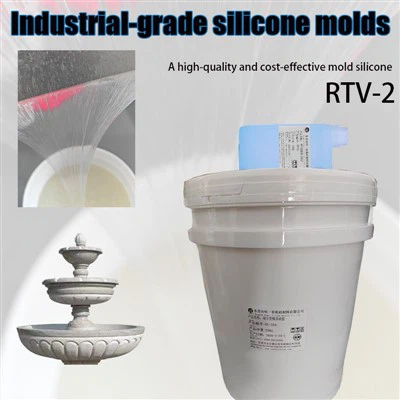
As a supplier of Textured stone silicone liquid, I often receive inquiries from customers about how to speed up the drying process of this product. In this blog post, I will share some effective methods based on scientific principles and practical experience.
Understanding the Drying Mechanism of Textured Stone Silicone Liquid
Before delving into the ways to accelerate drying, it's essential to understand the basic drying mechanism of Textured stone silicone liquid. Generally, the drying process of silicone liquid involves a chemical reaction called cross - linking. During this process, the long - chain silicone molecules connect with each other to form a solid, three - dimensional network structure. Factors such as temperature, humidity, and the ratio of the catalyst to the base silicone liquid can significantly influence the rate of this reaction.
1. Temperature Adjustment
Temperature plays a crucial role in the cross - linking reaction of Textured stone silicone liquid. Higher temperatures usually lead to faster reaction rates. According to the Arrhenius equation, the rate constant of a chemical reaction is exponentially related to temperature. As the temperature rises, the kinetic energy of the molecules increases, which means more molecules have enough energy to overcome the activation energy barrier of the cross - linking reaction.
- Using a Heated Chamber: One effective way is to place the Textured stone silicone liquid in a heated chamber. You can set the chamber temperature according to the product's specifications. For most Textured stone silicone liquids, a temperature range of 40 - 60°C can significantly speed up the drying process, but make sure not to exceed the maximum recommended temperature, as overheating may cause the silicone to deform or lose its desired properties.
- Warm Air Blowing: Another option is to use a warm air blower. Directing a stream of warm air towards the silicone liquid can increase the local temperature and promote faster drying. However, be careful to blow the air evenly to avoid uneven drying and potential surface defects.
2. Humidity Control
Humidity can either promote or inhibit the drying of Textured stone silicone liquid, depending on the type of silicone. Some silicone liquids rely on the moisture in the air for the cross - linking reaction, while others are sensitive to humidity and can experience slower drying or even improper curing in high - humidity environments.
- Low - Humidity Environment: If your Textured stone silicone liquid is humidity - sensitive, creating a low - humidity environment is crucial. You can use a dehumidifier in the drying area. Reduce the relative humidity to below 40% for optimal drying conditions. This helps prevent water molecules from interfering with the cross - linking reaction.
- Moisture - Dependent Silicone: For silicone liquids that require moisture for curing, maintaining a moderate level of humidity (around 50 - 60%) can be beneficial. You can use a humidifier to keep the humidity within the appropriate range.
3. Catalyst Proportion Optimization
The catalyst is a key component in the cross - linking reaction of Textured stone silicone liquid. It accelerates the chemical reaction between the silicone molecules. Adjusting the catalyst proportion can have a significant impact on the drying speed.
- Follow Manufacturer's Instructions: The manufacturer usually provides a recommended catalyst - to - base silicone liquid ratio. However, within a certain range, slightly increasing the amount of catalyst can speed up the drying process. But be cautious not to add too much catalyst, as it may cause the silicone to cure too quickly, resulting in cracking or uneven curing.
- Testing Different Ratios: Before large - scale production, it is advisable to conduct small - scale tests with different catalyst ratios. This way, you can find the optimal ratio that balances drying speed and product quality.
4. Air Circulation
Good air circulation can help remove the by - products generated during the cross - linking reaction, such as small molecules like water or alcohol. By removing these by - products, the reaction can proceed more smoothly, thus speeding up the drying process.
- Ventilation Fans: Install ventilation fans in the drying area. These fans can continuously exchange the air, carrying away the by - products and bringing in fresh air. This not only promotes faster drying but also helps maintain a stable environment for the silicone liquid.
- Open - Air Drying: If possible, drying the Textured stone silicone liquid in an open - air environment with natural air movement can be an effective option. However, make sure to protect the silicone from dust and other contaminants.
5. Pre - Treatment
Pre - treating the surface where the Textured stone silicone liquid is to be applied can also affect the drying process.
- Clean and Dry Surface: Ensure that the surface is clean and dry before applying the silicone liquid. Any dirt, oil, or moisture on the surface can slow down the drying process or cause adhesion problems. You can use a suitable cleaning agent to clean the surface and then dry it thoroughly.
- Priming the Surface: In some cases, applying a primer to the surface can enhance the adhesion of the silicone liquid and also promote faster drying. The primer can create a more reactive surface for the silicone to bond with, accelerating the cross - linking reaction.
Relevant Resources for Further Learning
If you want to know more about silicone products, here are some useful resources:
- Silicone used for making glassware molds: This page provides detailed information about using silicone for glassware mold making.
- How Should We Choose Silicone?: It offers guidelines on how to select the most suitable silicone for your specific needs.
- Condensation Mold Silicone Inks For Veitnam Candles: This link is about the use of condensation mold silicone inks for candles in Vietnam.
- Building Silicone Mold Liquid: It covers information related to building silicone mold liquid.
- The Mold Production Failed. 90% Of The Reason Was That The Wrong Type Of Silicone Was Chosen.: This article analyzes the reasons for mold production failures related to silicone selection.
Conclusion and Call to Action
Speeding up the drying process of Textured stone silicone liquid requires a combination of several factors, including temperature control, humidity adjustment, catalyst optimization, air circulation, and proper pre - treatment. By applying these methods, you can effectively reduce the drying time and improve production efficiency.
If you are interested in our Textured stone silicone liquid and want to know more about its properties, usage, or have any questions regarding the drying process, please feel free to contact us. We are always ready to provide you with professional advice and high - quality products. Engage us for further discussions and to explore the potential of enhancing your projects with our products.
References
- Atkins, P., & de Paula, J. (2010). Physical Chemistry (9th ed.). Oxford University Press.
- Rosato, D. V., Rosato, D. P., & Rose, J. G. (2000). Plastic Mold Engineering Handbook (4th ed.). Kluwer Academic Publishers.