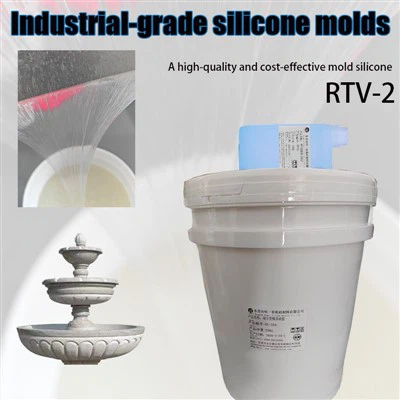
As a supplier of gypsum silicone liquid, I've received numerous inquiries about its suitability for marine environments. It's a fascinating topic, given the unique challenges the marine world throws at materials.
Let's start by understanding what gypsum silicone liquid is. It's a type of material that combines the properties of gypsum and silicone. Gypsum is well - known for its durability and workability. Silicone, on the other hand, offers flexibility, water - resistance, and chemical resistance. When these two are combined, we get a product that has the potential to be used in a wide range of applications.
Now, the marine environment is no walk in the park. It's a place full of saltwater, which is highly corrosive. Saltwater contains a variety of salts, mainly sodium chloride, that can eat away at many materials over time. There are also constant temperature fluctuations, from the cold depths to the warmer surface waters. And let's not forget about the physical forces, like waves, currents, and the abrasion from sand and debris.
One of the biggest questions is whether gypsum silicone liquid can withstand the corrosive nature of saltwater. In fact, silicone is inherently resistant to water and many chemicals. When it's part of the gypsum silicone liquid, it forms a protective barrier that can prevent saltwater from directly attacking the gypsum. However, over a long period, continuous exposure to saltwater might still have some effect. The high - salt content could potentially break down the silicone bond or seep through microscopic pores, causing the gypsum to degrade.
Another aspect to consider is the temperature changes in the marine environment. Gypsum silicone liquid has a certain range of temperature tolerance. If the temperature swings are too extreme, it could lead to thermal expansion and contraction of the material. This might cause cracks or delamination, weakening the structure. For example, in a cold - water environment, the material might become brittle, while in warmer waters, it could become too soft and lose its shape.
The physical forces in the ocean also play a crucial role. Waves and currents can exert a lot of pressure on any material. Gypsum silicone liquid has some degree of flexibility due to the silicone component, which allows it to absorb some of these forces. But if the waves are too powerful or the currents are too strong, it could still cause damage. Abrasion from sand and other debris is another concern. The repeated rubbing can wear down the surface of the material, exposing it to further damage.
Despite these challenges, there are also some factors that make gypsum silicone liquid a potentially good option for marine environments. First of all, its flexibility can be an advantage. It can bend and stretch without breaking under certain stress conditions, which is useful when dealing with the movement of water. Secondly, the ease of molding and shaping of gypsum silicone liquid allows it to be used in various custom - made applications in the marine industry, such as in the construction of marine sculptures, props, or even some parts of small boats.
If you're considering using gypsum silicone liquid in a marine application, it's important to understand the parameters involved. Understanding The Parameters Is The Key To Truly Mastering Adhesive Selection. This link provides in - depth information on what factors to look at when making a decision. Choosing the right type of silicone is crucial, as different types have different properties. For instance, What Are The Different Types Of Silicone Molds? explains the various options available and which might be more suitable for marine use.
There are also some specific products in the gypsum silicone liquid category that have shown good performance in similar environments. Condensation Mold Silicone Inks For Lotus Candles and High Performance Mold Making Silicone - Tin Cure are examples of products that have unique formulations that enhance their durability and resistance. However, it's important to note that the "Lotus Candles" product might seem out of context in a marine discussion, but the technology behind its silicone ink can offer insights into how the material can perform under certain conditions.


It's not uncommon for mold production to fail, and in many cases, it's due to choosing the wrong type of silicone. The Mold Production Failed. 90% Of The Reason Was That The Wrong Type Of Silicone Was Chosen. This is especially important in marine applications where the stakes are high. A failed mold or a damaged product could lead to costly repairs or replacements.
In conclusion, gypsum silicone liquid has both advantages and disadvantages when it comes to use in marine environments. It has the potential to be a good choice due to its flexibility and molding properties, but it also needs to be carefully evaluated against the harsh conditions of the ocean. If you're in the marine industry and are interested in exploring the use of gypsum silicone liquid, I'd love to have a chat with you. We can discuss your specific needs, the conditions your product will be exposed to, and find the best solution for your project. Whether it's for a small decorative item or a large - scale marine construction, we're here to help.
If you're thinking about making a purchase or just want to learn more about our gypsum silicone liquid products, don't hesitate to reach out. We're always ready to have a detailed discussion and provide you with the best advice based on our years of experience in the industry.
References:
- General knowledge about gypsum and silicone materials
- Industry reports on the use of silicone in challenging environments