Silicone art has gained significant popularity in recent years, offering a versatile medium for artists and creators to bring their imaginative ideas to life. One of the key aspects that can greatly enhance the quality and longevity of silicone art is its elasticity. Elasticity not only allows the silicone to stretch and bend without breaking but also contributes to the overall durability and flexibility of the finished piece. As an Artistic creation silicone supplier, I am well - versed in the various ways to make silicone art more elastic. In this blog, I will share some effective methods that can help you achieve this goal.
1. Select the Right Silicone Material
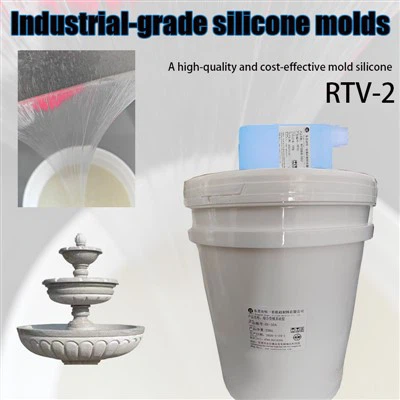
The first step in making silicone art more elastic is to choose the appropriate silicone material. Different types of silicone have varying levels of elasticity, and selecting the right one is crucial. For instance, Industrial - grade Silicone For Molds is designed to have high flexibility and elasticity, making it an excellent choice for artistic creations. These industrial - grade silicones are formulated with specific additives and polymers that enhance their elastic properties.
When choosing silicone, it is also important to consider the shore hardness. Shore hardness is a measure of the silicone's resistance to indentation, and lower shore hardness values generally indicate greater elasticity. For more elastic silicone art, look for silicones with a shore hardness in the range of 10 - 30. This range provides a good balance between flexibility and durability.
2. Add Plasticizers
Plasticizers are substances that can be added to silicone to increase its flexibility and elasticity. They work by reducing the intermolecular forces between the silicone molecules, allowing them to move more freely and stretch more easily. There are several types of plasticizers available, such as phthalate - based plasticizers and non - phthalate plasticizers.
When using plasticizers, it is important to follow the manufacturer's instructions carefully. Adding too much plasticizer can make the silicone too soft and sticky, while adding too little may not have a significant effect on the elasticity. A general rule of thumb is to start with a small amount of plasticizer and gradually increase the quantity until the desired level of elasticity is achieved.
3. Control the Curing Process
The curing process of silicone plays a vital role in determining its elasticity. Curing is the process by which the silicone changes from a liquid state to a solid state. If the curing process is not properly controlled, the silicone may become brittle or lose its elasticity.
One way to control the curing process is to adjust the temperature and humidity. Silicone cures faster at higher temperatures and lower humidity levels. However, curing too quickly can result in a less elastic silicone. It is recommended to cure the silicone at a moderate temperature, usually between 20 - 25 degrees Celsius, and a relative humidity of around 50 - 60%.
Another important factor is the mixing ratio of the silicone components. Most silicones come in two parts: a base and a catalyst. Mixing the components in the correct ratio is essential for proper curing and elasticity. Make sure to measure the components accurately and mix them thoroughly to ensure a uniform curing process.
4. Incorporate Reinforcing Agents
Reinforcing agents can be added to silicone to improve its mechanical properties, including elasticity. Fiberglass, for example, is a commonly used reinforcing agent. When added to silicone, fiberglass strands create a network within the silicone matrix, which helps to distribute stress and prevent cracking. This results in a more elastic and durable silicone art piece.


Microspheres are another type of reinforcing agent that can be used. These tiny spheres can be mixed into the silicone to reduce its density and increase its flexibility. They also help to improve the impact resistance of the silicone, making it less likely to break under stress.
5. Post - Curing Treatment
After the silicone has cured, a post - curing treatment can be applied to further enhance its elasticity. One common post - curing treatment is heat treatment. By heating the cured silicone to a specific temperature for a certain period of time, the molecular structure of the silicone can be further stabilized, resulting in improved elasticity.
Another post - curing treatment is mechanical stretching. Gently stretching the cured silicone art piece in different directions can help to realign the silicone molecules and increase its flexibility. However, it is important to be careful not to over - stretch the silicone, as this can cause it to tear or lose its shape.
6. Consider the Design and Thickness
The design and thickness of the silicone art piece can also affect its elasticity. A thinner silicone piece is generally more elastic than a thicker one because there is less material to resist stretching. When designing your silicone art, try to keep the thickness as uniform as possible to ensure consistent elasticity throughout the piece.
In addition, the shape and structure of the design can also impact elasticity. Designs with curves and bends are more likely to be elastic than designs with sharp angles or straight lines. This is because curves and bends allow the silicone to stretch more easily without putting too much stress on any one area.
7. Quality of Raw Materials
The quality of the raw materials used in the silicone production process is also a significant factor in determining the elasticity of the final product. High - quality raw materials are more likely to produce silicone with better elastic properties. As a supplier, I ensure that all the silicones I provide are made from top - grade raw materials, which are carefully selected and tested to meet the highest standards.
8. Storage and Handling
Proper storage and handling of silicone are essential to maintain its elasticity. Silicone should be stored in a cool, dry place away from direct sunlight and heat sources. Exposure to extreme temperatures can cause the silicone to degrade and lose its elasticity over time.
When handling silicone, it is important to avoid contact with sharp objects or abrasive materials, as these can damage the silicone and reduce its elasticity. Also, make sure to clean the silicone properly after use to remove any dirt or debris that may affect its performance.
9. Testing and Experimentation
Finally, testing and experimentation are key to finding the best way to make your silicone art more elastic. Try different combinations of materials, additives, and curing processes to see what works best for your specific project. You can also test the elasticity of your silicone art using simple methods, such as stretching it gently and observing how it responds.
As an Artistic creation silicone supplier, I am committed to providing high - quality silicone products and sharing my knowledge and experience with artists and creators. If you are interested in purchasing our silicone products for your artistic projects or have any questions about making silicone art more elastic, please feel free to contact us for a procurement discussion. We look forward to working with you to bring your creative ideas to life.
References
- "Silicone Rubber Technology" by Michael P. Stevens
- "Handbook of Silicones" by William Noll
- Various research papers on silicone materials and their properties from scientific journals.