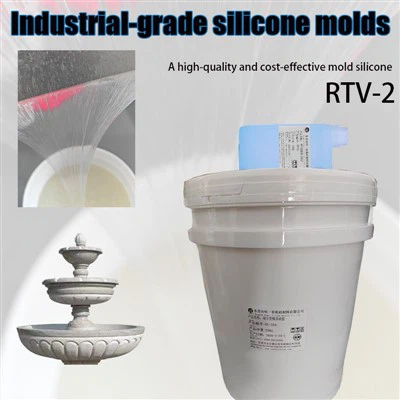
As a seasoned RTV - 2 silicone supplier, I often encounter inquiries regarding the diverse applications of our product. One question that has increasingly come to the fore is whether RTV - 2 silicone can be used for making musical instrument molds. In this blog, I'll delve into the technical aspects, advantages, and potential challenges of using RTV - 2 silicone in the realm of musical instrument mold making.
Understanding RTV - 2 Silicone
Room - Temperature - Vulcanizing (RTV) - 2 silicone is a two - component silicone rubber system. It consists of a base compound and a curing agent. When these two components are mixed in the correct ratio, a chemical reaction occurs at room temperature, leading to the formation of a solid, flexible silicone rubber. This type of silicone is well - known for its excellent flexibility, high tear strength, good chemical resistance, and low shrinkage during the curing process.
Suitability for Musical Instrument Molds
1. Precision and Detail Reproduction
Musical instruments often have complex and delicate designs. For example, the body of a violin has a smooth, curved surface with intricate f - holes, and the keys of a piano have specific shapes and dimensions. RTV - 2 silicone is highly suitable for capturing these fine details. Its low viscosity in the uncured state allows it to flow easily around the original instrument, filling every nook and cranny. Once cured, it can reproduce the exact shape and surface texture of the master instrument, ensuring that the mold can be used to create accurate replicas.
2. Flexibility
Flexibility is a crucial property when it comes to mold making. After the casting material (such as resin or plaster) has cured in the mold, the mold needs to be removed without damaging the newly formed instrument part. RTV - 2 silicone's high flexibility allows it to be bent and stretched slightly, facilitating the easy removal of the cast. This is especially important for musical instrument parts with undercuts or complex geometries.


3. Chemical Resistance
During the mold - making process and the subsequent casting operations, the mold may come into contact with various chemicals, such as solvents, resins, or release agents. RTV - 2 silicone offers good chemical resistance, which means it can withstand these chemicals without degrading or losing its physical properties. This ensures the longevity of the mold and maintains its quality over multiple casting cycles.
4. Temperature Stability
Many musical instruments are made using materials that require a certain temperature range during the casting process. RTV - 2 silicone has good temperature stability, which enables it to maintain its shape and properties within a reasonable temperature range. This is beneficial for ensuring consistent results in the casting of musical instrument components.
Potential Challenges
1. Cost
RTV - 2 silicone is generally more expensive compared to some other mold - making materials. For small - scale musical instrument production or hobbyists on a tight budget, the cost of using RTV - 2 silicone may be a significant factor. However, considering its long - term durability and the high - quality molds it can produce, it can be a cost - effective option in the long run.
2. Curing Time
The curing time of RTV - 2 silicone can vary depending on factors such as the type of silicone, the ratio of the base and curing agent, and the ambient temperature. In some cases, a quick turnaround may be required, and the relatively long curing time of RTV - 2 silicone can be a drawback. However, there are fast - curing formulations available that can significantly reduce the waiting time.
3. Surface Finish of the Cast
While RTV - 2 silicone can reproduce fine details, the surface finish of the cast may sometimes require additional post - processing. This is because the silicone mold surface may not always be perfectly smooth, which can affect the final appearance of the musical instrument part. However, with proper mold preparation and the use of appropriate release agents, the surface finish can be improved.
Case Studies in Musical Instrument Mold Making
There have been numerous successful applications of RTV - 2 silicone in the musical instrument industry. For instance, some guitar manufacturers use RTV - 2 silicone molds to produce the bodies of limited - edition guitars. The high precision of the molds allows for consistent production of guitars with the same shape and quality. Another example is in the production of wind instrument mouthpieces. The flexibility of the RTV - 2 silicone mold makes it easy to remove the cast mouthpieces without damaging them, and the fine detail reproduction ensures that the mouthpieces have the correct acoustic properties.
Comparison with Other Mold - Making Materials
When compared to other common mold - making materials like plaster or fiberglass, RTV - 2 silicone offers several advantages. Plaster molds are relatively inexpensive, but they lack the flexibility of RTV - 2 silicone, making it difficult to remove casts with complex shapes. Fiberglass molds are strong and durable, but they are not as good at capturing fine details as RTV - 2 silicone. Additionally, fiberglass can be more difficult to work with due to its high viscosity and the need for special handling during the curing process.
Other Applications of RTV - 2 Silicone
RTV - 2 silicone has a wide range of applications beyond musical instrument mold making. For example, it is commonly used in making Candle silicone mold liquid for the production of candles with intricate shapes. It is also used in Choosing The Wrong Silicone For Cultural Stone Molds Leads To Blurry Textures, Mold Blistering, And Short Lifespan? Try This Industrial - grade Solution. to create high - quality cultural stone replicas. The The Silicone Liquid Used For Making The Silicone Mold For Candles is also often RTV - 2 silicone because of its ability to reproduce detailed patterns. Moreover, it finds use in Condensation Mold Silicone Inks For Concrete/Cement and Condensation Mold Silicone Inks For Lotus Candles to achieve specific surface effects and designs.
Conclusion and Invitation to Contact
In conclusion, RTV - 2 silicone is a highly viable option for making musical instrument molds. Its precision, flexibility, chemical resistance, and temperature stability make it well - suited for the complex requirements of musical instrument production. Although there are some challenges such as cost and curing time, these can be managed with careful planning and selection of the appropriate silicone formulation.
If you are involved in the musical instrument manufacturing industry or are a hobbyist looking to make high - quality musical instrument molds, I encourage you to consider using RTV - 2 silicone. As a reliable RTV - 2 silicone supplier, I am more than willing to discuss your specific needs and help you find the best solution for your mold - making projects. Whether you are new to mold making or an experienced professional, I can provide you with detailed product information, technical support, and guidance on the best practices for using RTV - 2 silicone. Don't hesitate to reach out if you have any questions or if you're interested in discussing a potential purchase.
References
- "Silicone Rubber: Properties and Applications" by Smith, J. (2018)
- "Mold - Making Techniques for Musical Instrument Production" by Johnson, A. (2019)
- "Advanced RTV - 2 Silicone Technology" by Brown, C. (2020)