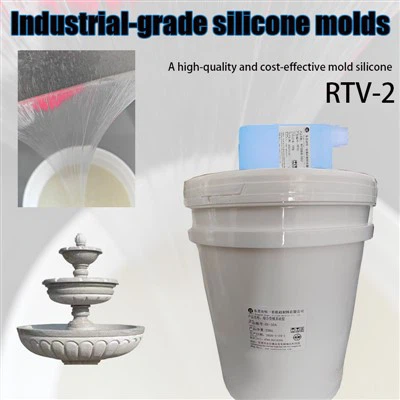
Alkali resistance is a crucial property when it comes to re - mold silicone, especially in various industrial and creative applications. As a supplier of re - mold silicone, I have witnessed firsthand the importance of understanding this characteristic to meet the diverse needs of our customers.
Understanding Re - mold Silicone
Re - mold silicone is a versatile material widely used for creating molds in multiple industries. It offers excellent flexibility, high tear strength, and the ability to reproduce fine details. This makes it ideal for applications such as creating Candle silicone mold liquid, which requires precise replication of intricate candle designs, and Silicone For Large - scale Stone Buildings, where large and complex molds are needed.
What is Alkali Resistance?
Alkali resistance refers to the ability of a material to withstand the corrosive effects of alkaline substances. Alkaline environments are common in many industrial processes, such as construction, chemical manufacturing, and food processing. When re - mold silicone is exposed to alkaline substances, it may undergo chemical reactions that can lead to degradation of its physical and mechanical properties.
Chemical Reactions in Alkaline Environments
In an alkaline environment, the silicone molecules in re - mold silicone can react with hydroxide ions. These reactions can break the silicon - oxygen bonds in the silicone structure, leading to chain scission. As a result, the silicone may lose its elasticity, become brittle, and its tear strength may decrease. This can significantly affect the performance and lifespan of the re - mold silicone mold.
Factors Affecting Alkali Resistance
Several factors influence the alkali resistance of re - mold silicone. One of the most important factors is the chemical composition of the silicone. Different types of re - mold silicone have different molecular structures, which can determine their resistance to alkali. For example, silicone with a higher cross - linking density generally has better alkali resistance because the cross - links can prevent the penetration of alkaline substances into the silicone structure.
The additives used in the re - mold silicone also play a role. Some additives can enhance the alkali resistance of silicone by forming a protective layer on the surface or by reacting with alkaline substances to neutralize their corrosive effects. Additionally, the curing process of the re - mold silicone can affect its alkali resistance. A well - cured silicone with a homogeneous structure is more likely to have better alkali resistance than a poorly cured one.


Testing Alkali Resistance
To accurately assess the alkali resistance of re - mold silicone, various testing methods are available. One common method is the immersion test. In this test, a sample of the re - mold silicone is immersed in an alkaline solution for a specific period of time. The solution can be a sodium hydroxide solution with a certain concentration, which is representative of many alkaline environments in real - world applications.
After the immersion period, the sample is removed and examined for changes in its physical properties. These properties may include hardness, tear strength, and elongation at break. A significant decrease in these properties indicates poor alkali resistance. Another testing method is the surface analysis. This can be done using techniques such as scanning electron microscopy (SEM) and energy - dispersive X - ray spectroscopy (EDX). SEM can show the surface morphology of the silicone before and after exposure to alkali, while EDX can analyze the chemical composition of the surface to detect any changes caused by the alkaline substances.
Importance of Alkali Resistance in Different Applications
Industrial Applications
In industrial applications, such as Silicone For Large - scale Stone Buildings, the re - mold silicone may come into contact with alkaline substances in the construction materials, such as cement and mortar. If the silicone does not have good alkali resistance, it can degrade over time, leading to inaccurate mold replication and reduced mold lifespan. This can result in increased costs for mold replacement and production delays.
Creative Applications
In creative applications, such as To Create Exquisite Lotus Lantern Molds, Choosing The Right Industrial - grade Mold Silicone Is The Key., the re - mold silicone may be used in contact with some alkaline - containing materials during the mold - making process. For example, some release agents or cleaning agents may have alkaline properties. If the silicone is not alkali - resistant, it can affect the quality of the mold and the final product.
Improving Alkali Resistance
As a re - mold silicone supplier, we are constantly working on improving the alkali resistance of our products. One approach is to optimize the chemical formulation of the silicone. By selecting the appropriate raw materials and additives, we can enhance the cross - linking density and the chemical stability of the silicone.
Another way is to provide proper curing instructions to our customers. How Should The Curing Agent Be Added To Ensure That The Silicone Rubber Has A Long Service Life? This is a crucial question because a well - cured silicone has better resistance to various environmental factors, including alkali. We also offer guidance on the use and storage of our re - mold silicone to minimize its exposure to alkaline substances.
Selecting the Right Re - mold Silicone Based on Alkali Resistance
When customers are choosing re - mold silicone, they need to consider the specific alkaline environment in which the silicone will be used. Understanding The Parameters Is The Key To Truly Mastering Adhesive Selection. They should look at the technical data sheet of the silicone, which usually provides information about its alkali resistance. If the application involves high - concentration alkaline substances or long - term exposure to alkali, they should choose a re - mold silicone with high alkali resistance.
Conclusion
Alkali resistance is an essential property of re - mold silicone. It affects the performance, lifespan, and quality of the molds made from this material. As a re - mold silicone supplier, we are committed to providing high - quality products with excellent alkali resistance. We understand the diverse needs of our customers in different industries and creative fields. If you are interested in our re - mold silicone products or have any questions about alkali resistance, please feel free to contact us for further discussion and procurement negotiation.
References
- "Silicone Rubber: Chemistry and Technology" by A. L. Smith
- "Handbook of Industrial and Hazardous Wastes Treatment" by S. A. El - Hanafy