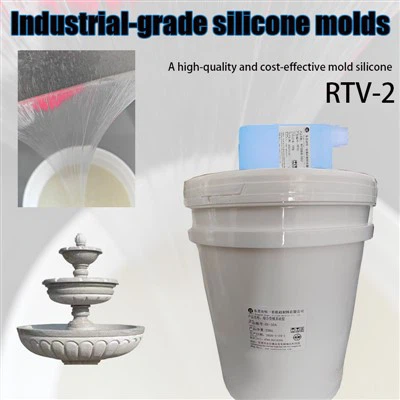
Hey there! As a supplier of flip mold silicone, I know how crucial it is to get that perfect degassing process right. Degassing flip mold silicone is like the secret sauce to achieving high - quality molds. In this blog, I'm gonna share with you some effective ways to degas flip mold silicone.
Why Degassing is Important
Before we jump into the how - to part, let's talk about why degassing is so important. When you mix flip mold silicone, air bubbles can get trapped inside. These bubbles can cause all sorts of problems in your final mold. They can create imperfections on the surface, like small holes or rough patches. And if you're making a mold for a detailed object, those bubbles can ruin the fine details. So, degassing is essential to ensure a smooth, bubble - free mold.
Methods of Degassing Flip Mold Silicone
Vacuum Degassing
Vacuum degassing is one of the most popular methods. You'll need a vacuum chamber for this. Here's how it works:
- First, pour your mixed flip mold silicone into a suitable container. Make sure the container isn't too full, as the silicone will expand when it's under vacuum.
- Place the container with the silicone into the vacuum chamber.
- Seal the chamber and start the vacuum pump. As the air is removed from the chamber, the pressure inside drops. The air bubbles in the silicone will start to rise to the surface and burst.
- Keep the silicone in the vacuum chamber until all the bubbles are gone. This might take a few minutes, depending on the amount of silicone and the size of the bubbles.
The great thing about vacuum degassing is that it's very effective. It can remove even the tiniest bubbles. However, it does require some equipment. If you're a small - scale user, investing in a vacuum chamber and pump might be a bit expensive.
Stirring and Resting
If you don't have a vacuum chamber, you can try the stirring and resting method. It's a more low - tech approach, but it can still work well.
- After mixing your flip mold silicone, stir it really well. Use a spatula or a stir stick and make sure you're getting into all the corners of the container. This helps to break up the larger air bubbles.
- Once you've stirred it thoroughly, let the silicone rest for a while. The air bubbles will slowly rise to the surface on their own. You can speed up this process by gently tapping the container on a hard surface. This will encourage the bubbles to move upwards.
- Keep an eye on the silicone. After some time, you'll see that most of the bubbles have disappeared. You can then use the silicone to make your mold.
The downside of this method is that it might not remove all the bubbles. Some smaller bubbles might still be left in the silicone. But it's a good option if you're on a budget or just doing some small - scale projects.
Using Anti - Foaming Agents
Another way to degas flip mold silicone is by using anti - foaming agents. These agents are designed to reduce the surface tension of the silicone, which makes it easier for the air bubbles to escape.
- Add a small amount of anti - foaming agent to your mixed silicone. The exact amount will depend on the type of agent and the amount of silicone you're using. Usually, you'll need about 0.1% to 0.5% of the total volume of the silicone.
- Stir the silicone well to make sure the anti - foaming agent is evenly distributed.
- Let the silicone rest for a short period. The anti - foaming agent will start to work, and the bubbles will rise to the surface.
Anti - foaming agents can be a convenient option, but you need to be careful not to add too much. If you add too much, it can affect the properties of the silicone, like its curing time or its strength.


Tips for Effective Degassing
- Mixing Technique: When you're mixing the flip mold silicone, use a slow and steady stirring motion. Avoid stirring too vigorously, as this can introduce more air bubbles. Also, make sure you're scraping the sides and bottom of the container to get all the silicone mixed properly.
- Temperature: The temperature of the silicone can affect the degassing process. Silicone is more viscous at lower temperatures, which makes it harder for the bubbles to rise. So, try to work in a warm environment. You can also warm up the silicone slightly before degassing, but be careful not to overheat it.
- Container Selection: Choose a container that has a wide opening. This will make it easier for the bubbles to escape. A narrow - necked container can trap the bubbles and make degassing more difficult.
Our Products and Their Degassing Needs
As a flip mold silicone supplier, I want to tell you a bit about our products. We offer a range of high - quality flip mold silicones, each with its own unique properties. For example, our Silicone Liquid For Molds is great for making all sorts of molds. It has a good flowability, but like any silicone, it needs proper degassing to get the best results.
Our Understanding The Parameters Is The Key To Truly Mastering Adhesive Selection. product is designed for more specialized applications. It has a different viscosity and curing time compared to other silicones, so you might need to adjust your degassing process accordingly.
The Building Silicone Mold Liquid is ideal for large - scale construction projects. It can be a bit more challenging to degas because of its large volume, but with the right techniques, you can still achieve a bubble - free mold.
Our Condensation Mold Silicone Inks ShoreA 5 is a unique product with a specific shore hardness. Degassing this silicone requires a careful balance to ensure that the properties of the ink are not affected.
And our Candle silicone mold liquid is perfect for making candle molds. It needs to be degassed properly to create a smooth and detailed mold for your candles.
Conclusion
Degassing flip mold silicone is an important step in the mold - making process. Whether you choose vacuum degassing, stirring and resting, or using anti - foaming agents, the goal is to get a bubble - free silicone. By following the tips I've shared and understanding the specific needs of our products, you can achieve high - quality molds every time.
If you're interested in our flip mold silicone products or have any questions about degassing, feel free to reach out. We're always happy to help you with your mold - making projects. Let's start a conversation and see how we can work together to meet your needs.
References
- Smith, J. (2020). "The Art of Silicone Mold Making". Publisher: MoldTech Press.
- Johnson, A. (2019). "Silicone Degassing Techniques". Journal of Silicone Applications, 15(2), 45 - 52.