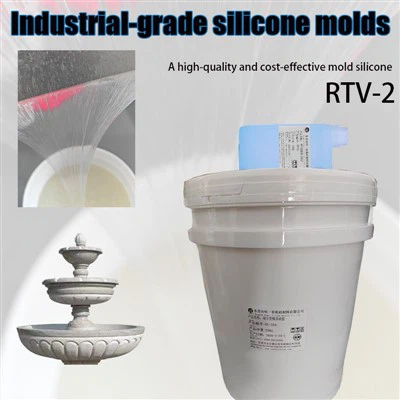
Yo! As a supplier of silicone ink, I often get asked about the curing temperature for silicone ink. It's a crucial topic because the right curing temperature can determine the quality, durability, and performance of the printed products. So, let's dive right into it and explore what the curing temperature for silicone ink is all about.
Understanding Silicone Ink Curing
First off, let's understand what curing means in the context of silicone ink. Curing is the process where the ink transforms from a liquid or semi - liquid state to a solid, durable finish. This transformation is essential for the ink to adhere properly to the substrate and to achieve its desired properties.


The curing of silicone ink is typically a chemical reaction. There are different types of silicone inks, and each may have its own specific curing requirements. For example, some silicone inks cure through a process called addition curing, while others use condensation curing.
Factors Affecting Curing Temperature
Several factors play a role in determining the appropriate curing temperature for silicone ink.
- Type of Silicone Ink: Different formulations of silicone ink have different chemical compositions, which directly affect their curing temperatures. For instance, Natural Dry Silicone might have a different curing temperature compared to Luminescent Silicone. The natural dry silicone is designed to dry under normal environmental conditions to some extent, but it still may need a certain temperature boost to fully cure. On the other hand, luminescent silicone might require a specific temperature range to activate its luminescent properties during curing.
- Substrate Material: The material on which the ink is printed also matters. If you're printing on a heat - sensitive substrate like some plastics, you can't use a very high curing temperature as it might damage the substrate. For example, printing on a thin plastic film might require a lower curing temperature compared to printing on a thick, heat - resistant metal surface.
- Desired Properties of the Print: If you want a very hard and durable finish, you might need to use a higher curing temperature. A higher temperature can speed up the chemical reaction and result in a more cross - linked and robust ink layer. However, if you're looking for a softer, more flexible print, a lower curing temperature might be more appropriate.
Typical Curing Temperature Ranges
In general, the curing temperature for silicone ink can range anywhere from room temperature to around 200°C (392°F).
- Room Temperature Curing: Some silicone inks, like the ones we offer in our Natural Dry Silicone line, can cure at room temperature. Room - temperature curing is convenient as it doesn't require any additional heating equipment. However, it usually takes longer for the ink to fully cure. It can take anywhere from a few hours to a couple of days, depending on the humidity and air circulation in the environment.
- Low - Temperature Curing (50 - 100°C or 122 - 212°F): This range is suitable for heat - sensitive substrates. For example, if you're printing on fabrics or thin plastics, a low - temperature curing process can prevent the substrate from warping or melting. Many of our Ribbon Printing Silicone products fall into this category. The curing time at these temperatures is shorter than at room temperature, usually taking around 15 - 30 minutes.
- Medium - Temperature Curing (100 - 150°C or 212 - 302°F): This is a common range for a lot of silicone ink applications. It offers a good balance between curing speed and the ability to handle a variety of substrates. In our Condensation Mold Silicone Inks For Resins, the medium - temperature curing process helps in achieving a strong bond between the ink and the resin substrate. Curing in this range can take about 5 - 15 minutes.
- High - Temperature Curing (150 - 200°C or 302 - 392°F): This is used when a very hard and durable finish is required. For example, Molded Silicone products often need a high - temperature cure to ensure that the ink can withstand the stresses of the molding process and daily use. The curing time at these high temperatures can be as short as 1 - 5 minutes.
Importance of Accurate Curing Temperature
Getting the curing temperature right is super important. If the temperature is too low:
- The ink may not fully cure. This can result in a sticky or tacky surface that smudges easily. The print won't have the proper adhesion to the substrate, and it may start peeling off over time.
- The physical properties of the ink, such as hardness, flexibility, and chemical resistance, won't be optimal.
On the other hand, if the temperature is too high:
- It can damage the substrate, as mentioned earlier. For example, a plastic substrate may melt or warp, ruining the print.
- It can also cause the ink to degrade. The colors may fade, and the ink may lose its desired properties.
How to Control the Curing Temperature
Controlling the curing temperature depends on the scale of your operation.
- Small - scale operations: You can use a simple heat gun or a small oven. A heat gun allows you to focus the heat directly on the printed area. You need to be careful, though, as it can be easy to overheat a small area. A small oven gives a more even heat distribution, but it may take longer to reach the desired temperature.
- Large - scale operations: Industrial - grade ovens or conveyor dryers are used. These can accurately control the temperature and the curing time. They are designed to handle a high volume of printed products efficiently.
Conclusion and Call to Action
So, there you have it – a breakdown of what the curing temperature for silicone ink is. As you can see, it's a complex topic that depends on multiple factors. But as a seasoned silicone ink supplier, I can help you figure out the best curing temperature for your specific needs.
If you're in the market for high - quality silicone ink and need advice on the curing process, don't hesitate to reach out. We have a wide range of products, including Natural Dry Silicone, Luminescent Silicone, Condensation Mold Silicone Inks For Resins, Molded Silicone, and Ribbon Printing Silicone. Let's start a conversation and find the perfect solution for your printing projects.
References
- "Silicone Ink Technology and Applications" - Industry research report on silicone ink properties and curing.
- "Printing with Silicone Inks: Best Practices" - A guidebook for printers using silicone inks.