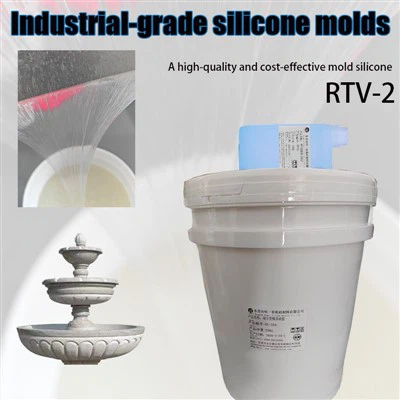
Hey there! As a supplier of re - mold silicone, I'm super stoked to share with you how this amazing stuff works. Re - mold silicone is a game - changer in so many industries, from art and crafts to industrial manufacturing. So, let's dive right in!
What is Re - mold Silicone?
First off, re - mold silicone is a type of silicone rubber that can be used to create molds. It's a flexible and durable material that can take on the shape of almost any object you want to replicate. There are different types of re - mold silicone, but one of the most common ones is the condensation type.
The condensation type of re - mold silicone is great for a variety of applications. You can learn more about it in this article: Why Is Condensation Type Mold Silicone The Ideal Choice For Concrete Art?. It's often used for making molds for concrete, cement, candles, and cultural stones.
How Does the Mixing Process Work?
The first step in using re - mold silicone is the mixing process. Usually, re - mold silicone comes in two parts: the base silicone and the curing agent. You need to mix these two parts together in the right ratio.
The ratio is crucial because it affects the properties of the final mold, like its flexibility, hardness, and how long it takes to cure. For example, if you add too much curing agent, the silicone might cure too quickly and become brittle. On the other hand, if you don't add enough, it might not cure properly at all.
You can find out more about how to add the curing agent to ensure a long - lasting silicone rubber in this article: How Should The Curing Agent Be Added To Ensure That The Silicone Rubber Has A Long Service Life?.


To mix the silicone and the curing agent, you'll need a clean container and a stir stick. Pour the base silicone into the container first, and then add the curing agent according to the recommended ratio. Start stirring slowly at first, then increase the speed to make sure the two parts are thoroughly combined. A good tip is to scrape the sides and bottom of the container while you're stirring to get all the ingredients mixed well.
Making the Mold
Once you've mixed the re - mold silicone, it's time to make the mold. First, you need to prepare the object that you want to make a mold of. Make sure it's clean and dry, and you might want to apply a release agent to it. A release agent helps the silicone separate from the object easily after it cures.
Then, pour the mixed silicone over the object. You want to pour it slowly to avoid creating air bubbles. If you do get some air bubbles, you can use a toothpick or a small tool to pop them. You can also use a vacuum chamber to remove the air bubbles, which is a more professional method.
After pouring the silicone, let it sit for the curing time. The curing time depends on several factors, like the type of silicone, the temperature, and the size of the mold. Usually, it can take anywhere from a few hours to a couple of days.
Applications of Re - mold Silicone
Re - mold silicone has a wide range of applications.
Concrete and Cement
For concrete and cement work, you can use Condensation Mold Silicone Inks For Concrete/Cement. These inks are designed to work with the condensation type of re - mold silicone to create high - quality molds for concrete art, like statues, tiles, and decorative elements.
Candles
Candle - making is another area where re - mold silicone shines. You can use Candle silicone mold liquid to create all sorts of unique candle molds. Whether you want to make candles in the shape of animals, flowers, or geometric shapes, re - mold silicone can help you bring your ideas to life.
Cultural Stones
In the construction and decoration industry, Cultural stone mold silicone liquid is used to make molds for cultural stones. These molds can replicate the texture and appearance of natural stones, which are then used for building facades, fireplaces, and other decorative features.
Advantages of Re - mold Silicone
One of the biggest advantages of re - mold silicone is its flexibility. It can bend and stretch without breaking, which makes it easy to remove the finished product from the mold. It also has good chemical resistance, so it can withstand exposure to different chemicals without degrading.
Another plus is its durability. A well - made re - mold silicone mold can be used multiple times, which can save you money in the long run. And because it can accurately reproduce the details of the original object, you can get high - quality replicas every time.
Tips for Using Re - mold Silicone
- Store it properly: Keep your re - mold silicone in a cool, dry place. Exposure to heat and moisture can affect its properties.
- Follow the instructions: Always read and follow the manufacturer's instructions for mixing, curing, and using the silicone.
- Test it first: If you're using a new type of silicone or working on a new project, it's a good idea to do a small test first to make sure everything works as expected.
Contact for Purchase
If you're interested in buying re - mold silicone for your projects, whether it's for concrete art, candle - making, or cultural stone production, I'm here to help. We offer high - quality re - mold silicone products that meet a variety of needs. Don't hesitate to contact me for more details and to start a discussion about your requirements.
References
"Silicone Rubber Handbook,” Jürgen Michaeli, et al.
"Industrial Silicones: Chemistry and Technology," R. H. Parker.